• Got the Contributing Memberships stuff finally worked out and made up a thread as a sort of "How-To" to help people figure out how to participate. So if you need help figuring it out, here's the thread you need to take a look at -> http://www.corvetteflorida.com/forums/showthread.php?t=3581 Thank you, everyone! Rich Z.

C5 Changing M6 and differential fluids

Rich Z

Internet Sanitation Engineer
Staff member
Been thinking for a while that I really should change out the fluids in the differential and transmission on the blue C5Z so I ordered the fluids and had them sitting in the cabinet for a little while. I was thinking about the condition of the engine oil when I drained it after getting it back from South Georgia Corvette, and I guess it's probably foolish for me to trust even these initial fluids were done correctly, all things considered.

So I decided that today was the day. Put the car up on the lift and started in on it.

I started with the differential so first thing to do was to drain the old fluid, here's a pic of where the drain plug is located:
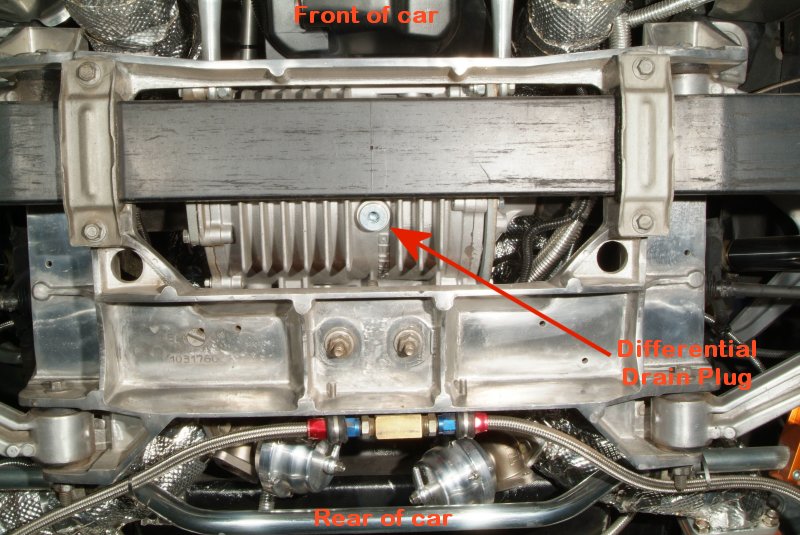
fluid plugs_01.jpg


And then once that was drained, put the drain plug back in, torqued it to about 25 ft/lbs, and moved on to locating the filler plug and removing that:
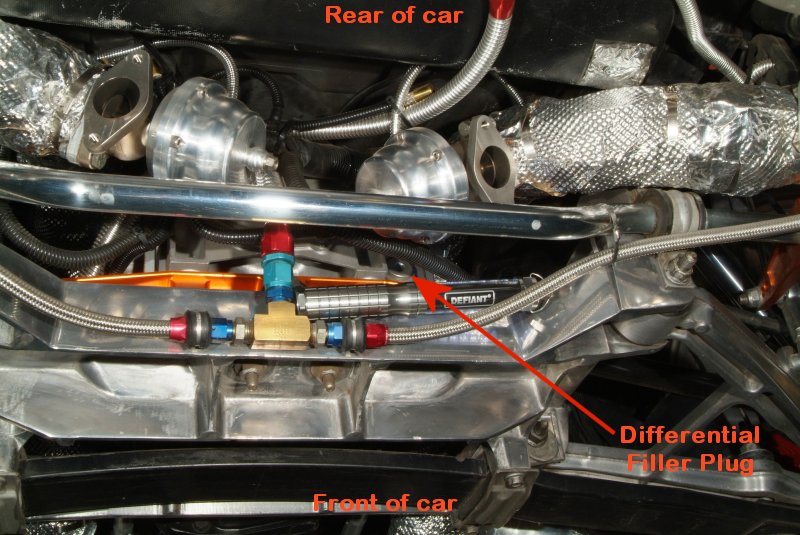
fluid plugs_02.jpg


In order to remove both those plugs, you will need a 10mm allen wrench, or to make things easier, use an H10 socket with a ratchet.
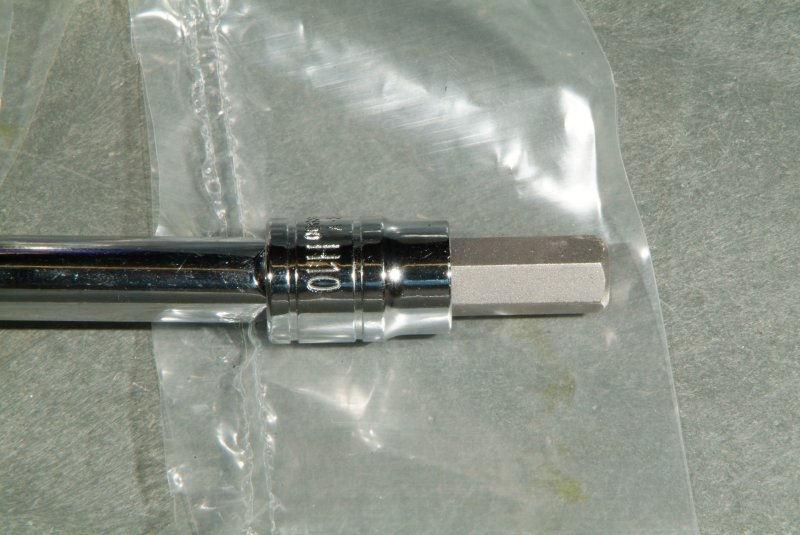
H10.jpg


My differential took just slightly over 2 quarts before it started running out of the filler hole.

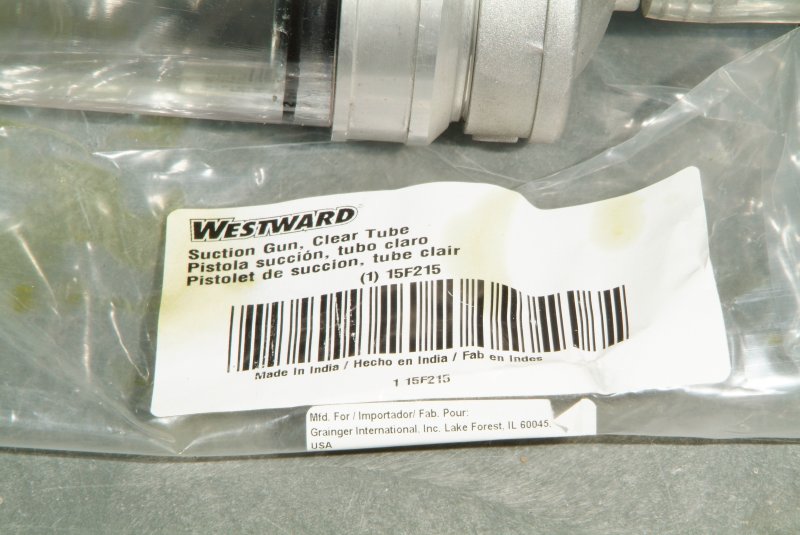
BTW, you are going to need one of these things to do the differential and transmission:
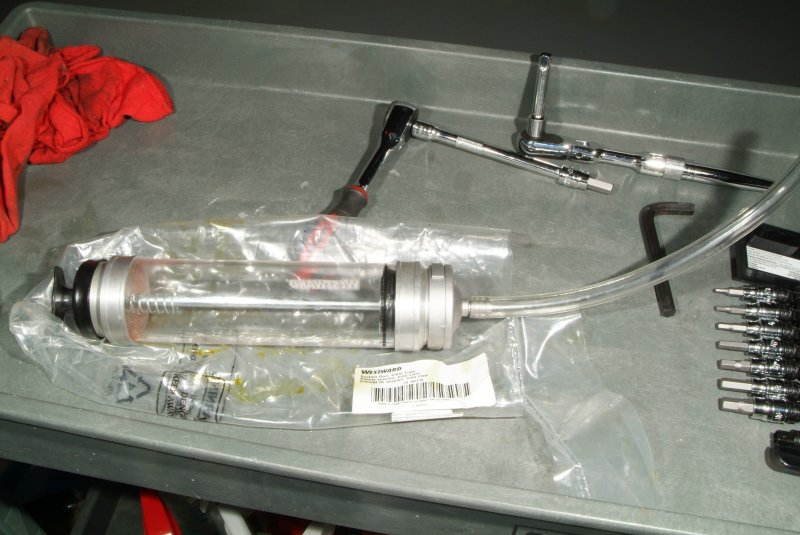
fluid_pump_01.jpg


fluid_pump_02.jpg


Unless you can flip the car upside down, or you want to completely remove those units from the car, it's the only way to get fluid INTO the filler holes.

Put the filler plug back in, and on to the transmission. This would have been a LOT easier without all that turbo plumbing in back of the differential. And just a note, that filler plug on the differential was REALLY in there tight. Not sure why that would be, as the drain plug came out very easily.

BTW, I put sealant on all the plugs. Probably a good idea to keep the fluids from seeping around the plugs eventually.
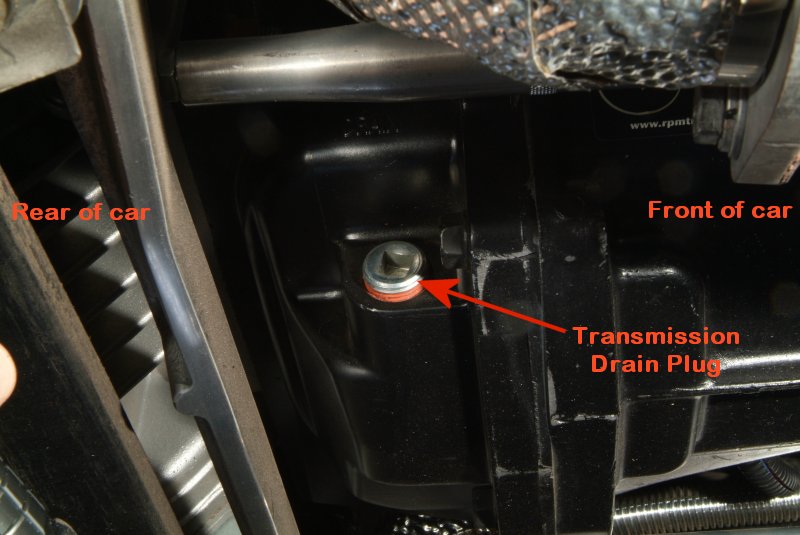
 
So now the transmission. It's a M6 6-speed manual, of course.

So here's the drain plug:
fluid plugs_03.jpg


This only needs a 3/8 ratchet extension that fits right into it, so no socket of allen wrench is needed

Drained out the fluid and then put the plug back in with some sealant on the threads.

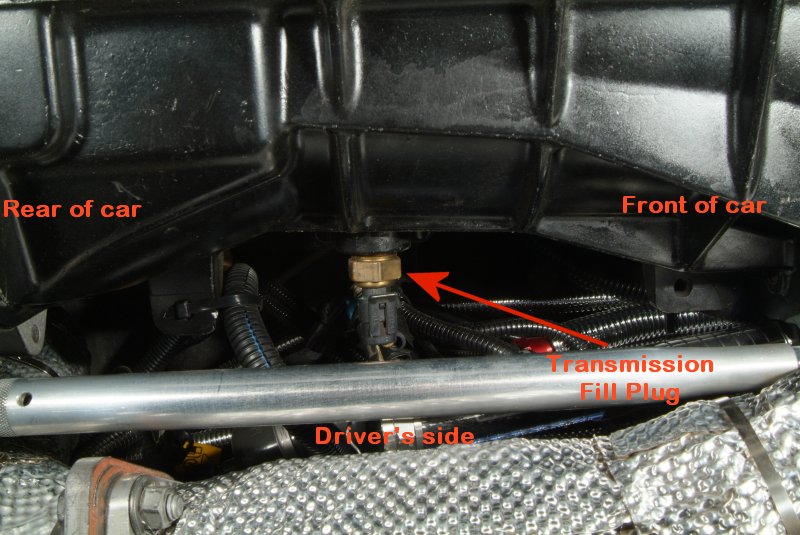
Here's where the filler plug is located on the transmission:
fluid plugs_04.jpg


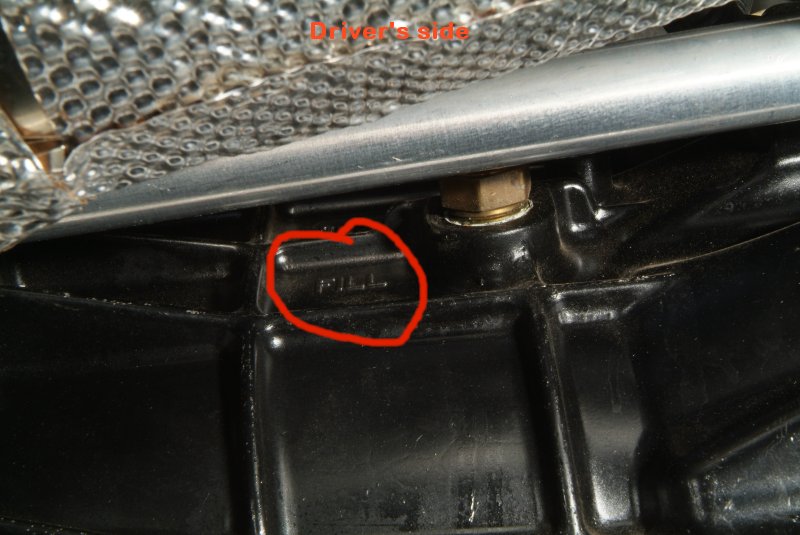
To help you figure it out, it actually says "FILL" right next to the plug.
fluid plugs_05.jpg


First you have to remove the cable that goes to the plug, as evidently the plug does double duty as the transmission temperature sensor as well as being a plug, You'll need a 7/8s inch open end or box wrench for this. Some people will use a crescent wrench, but I prefer to use a wrench that FITS.

Filled the transmission with Royal Purple Synchromax till it started dripping out of the filler hole. It took just a bit over 3 quarts to be filled. Man that stuff feels slippery as all getout. I thought I was going to drop the pump for certain as it was pretty tough holding onto it.

Put sealant on the filler plug, put it back in and then re-attached the cable, and it was done. Cleaned up the mess, and yep, it's a pretty messy job. No way I would want to do this laying on the ground with the car up on jacks or supports, but I'm lazy like that.

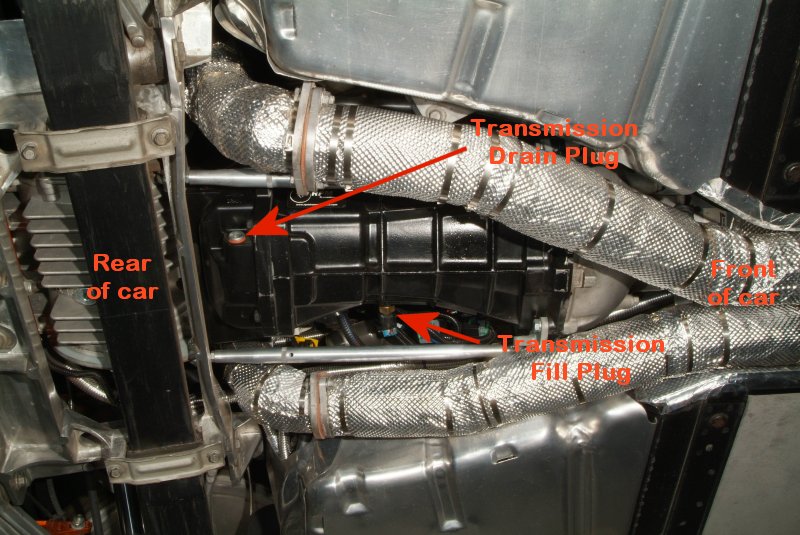
Here's another photo showing the plugs from a wide angled view:
fluid plugs_06.jpg


It's not a hard job at all with the car up on a lift.

Now all I have to do is take the car out for a spin and see if anything is making any strange noises.

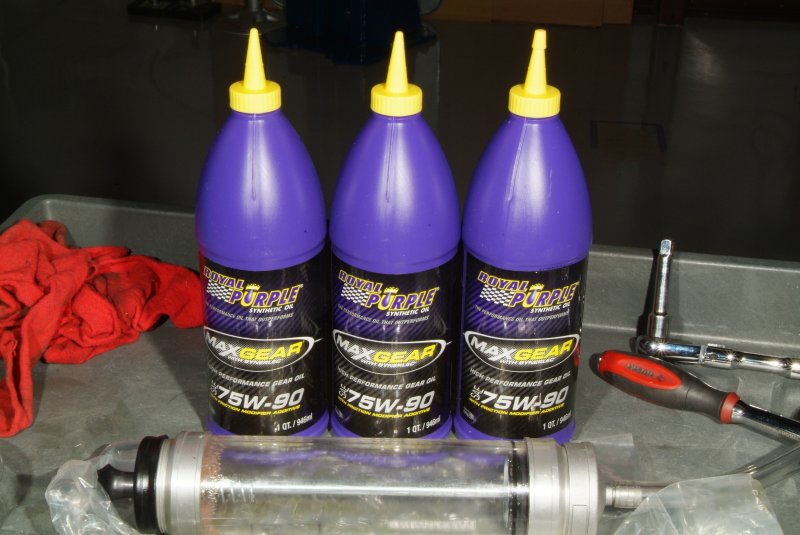
Oh, btw, here's the fluid I used in the differential:
diff_fluid_01.jpg


The pump worked really well with that large diameter tube on it and surely made the job a lot easier.
 
Did you use a friction modifier in the differential?

It's not needed with the Royal Purple stuff.

BTW, does anyone know what "friction modifier" actually means? Does it help to make MORE friction or LESS friction?
 
+ Click To Enlarge

Prev

Next

G7103 - GM POSI DIFFERENTIAL FLUID ADDITIVE - FRICTION MODIFIER

Original GM limited slip differential lubricant additive specially formulated for use with limited slip or positraction rear axles. This additive is a must to eliminate overheating and possible damage to the friction plates. Get the additive that was specially formulated by General Motors and protect your differential with the best quality additive on the market!
 
Before you can understand how friction modifiers function, it is important to understand how "wet" clutches perform.*

In a wet clutch arrangement, there are three stages of engagement. During the first stage, the clutch is not in contact with the pressure plate or other metal plate. We will use an automatic transmission torque converter as an example. Anyone who has driven auto trans cars with lockup torque converters for a while has probably experienced a phenomenon known as "lockup shudder" or "torque converter shudder". Shudder is caused during torque converter clutch lockup by burnt fluid or fluid wich has exhausted all of it's friction modifers. The result is a chattering feeling when the torque converter goes into lockup mode. I will now attempt to explain the physics of wet clutch engagement.*

As I have already mentioned, during the first stage the clutch is not in contact with it's mating surface. The fluid itself, however, is acting as a viscous coupling, causing a partial engagement. A side effect of this is heat, and I believe you all know that heat is the killer of automotive oils.*

The second stage is very simlar to the first. At this point the clutch is very close, possible within thousandths of an inch, from it's mating surface. The viscous coupling is now more effective, but the pressure and shear load on the fluid are also higher, and the result is increased heat.*

During the third stage, the clutch actually contacts it's mating surface and positive engagement is reached. The shear load of the fluid has been overcome and has either extruded itself outside of the clutch material or, depending on the application, has partly or entirely extruded itself through a porous friction material, thus exiting the engagement area of the clutch.*

Now that we have an understanging of wet clutch engagement, lets see how that plays out in the real world. If a fluid has lost a substantial amount of the friction modifier, the shear of the fluid will be inconsistant accross the engagement surface and the clutch will briefly alternate between full engagement (stage 3) and viscous engagement (stage 2). The as power through the assembly varies, wich is connected in our case to a vehicle that we are inside of, a bucking of sorts is perceptable to it's occupants as power transmitted to the wheels is momentarely interrupted and regained.*

In an application like a limited slip rear end, similar phenomena occur but in a slightly different manner. Because the clutch plates are constantly loaded with heavy springs, in theory they should always remain in stage 3 of lockup. If that were the case however, they would never slip. So the purpose of a friction modifier in a rear end is to ensure that the transition from S3 to S2 and back again during cornering etc. is smoothe. Therefor chatter occurs in much the same way it does in our torque converter clutch scenerio.*

So the answer to your question if friction modifiers enhance friction or reduce it? The answer is there is no answer. Depending on what the application calls for and how it is engineered, they can do either. So as Alex said, it does just that; modifies friction.
 
Hmm, so in the case of a limited slip differential, would it be best to have a more slippery lubricant, or a less slippery one?

Sorry, but I'm still not sure how exactly the friction is "modified" in this specific case. I guess what I am thinking of that if the clutch plates are affected, they will not be alone. So what about the other mating surfaces where wear will take place? Generally with wear surfaces, the less friction the better to reduce or hopefully even eliminate wear completely. Which, of course, is generally the purpose of a lubricant in the first place. So why the "modifier" at all?
 
as the guy i quoted said, it just depends on what it needs to do. that's why it's called a "modifier". either adds friction or adds slipperiness depending on what the engineers need it to do.
 
as the guy i quoted said, it just depends on what it needs to do. that's why it's called a "modifier". either adds friction or adds slipperiness depending on what the engineers need it to do.

OK, I get that, but what do the engineers WANT the friction modifier to do in a differential?
 
Back
Top